#1
Decluttering and Source Removal
Best for: Garages, basements, attics, and storage rooms with piles of boxes or fabric
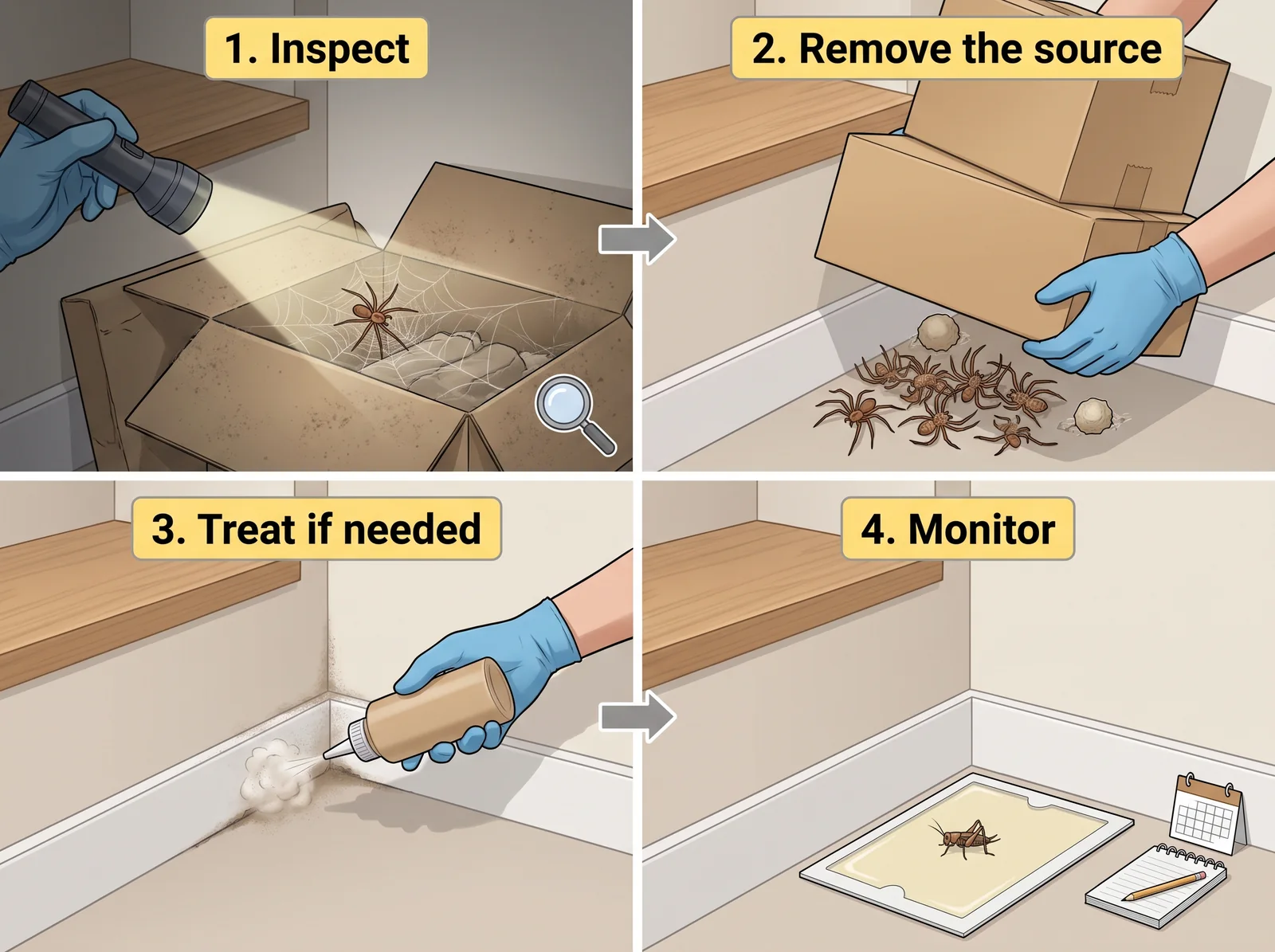
Brown recluse spiders spend most of their time tucked into dark, undisturbed spaces like cardboard boxes, folded blankets, and stacked newspapers. Clearing out this clutter removes the hiding spots they rely on and makes any remaining spiders far easier to spot.
This is the step that makes every other option work better. Traps catch more, inspections find more, and treatments reach more spiders once the clutter that shields them is gone.
Useful strengths
- Addresses the root cause instead of just the spiders you see
- Costs nothing but time
- Improves results for every other method on this list
Limits to consider
- Takes physical effort, especially in large storage areas
- Won't remove spiders already established in wall voids or crawlspaces
#2
Sealing Entry Points and Gaps (Exclusion)
Best for: Homes with visible gaps around doors, windows, utility lines, or foundation cracks
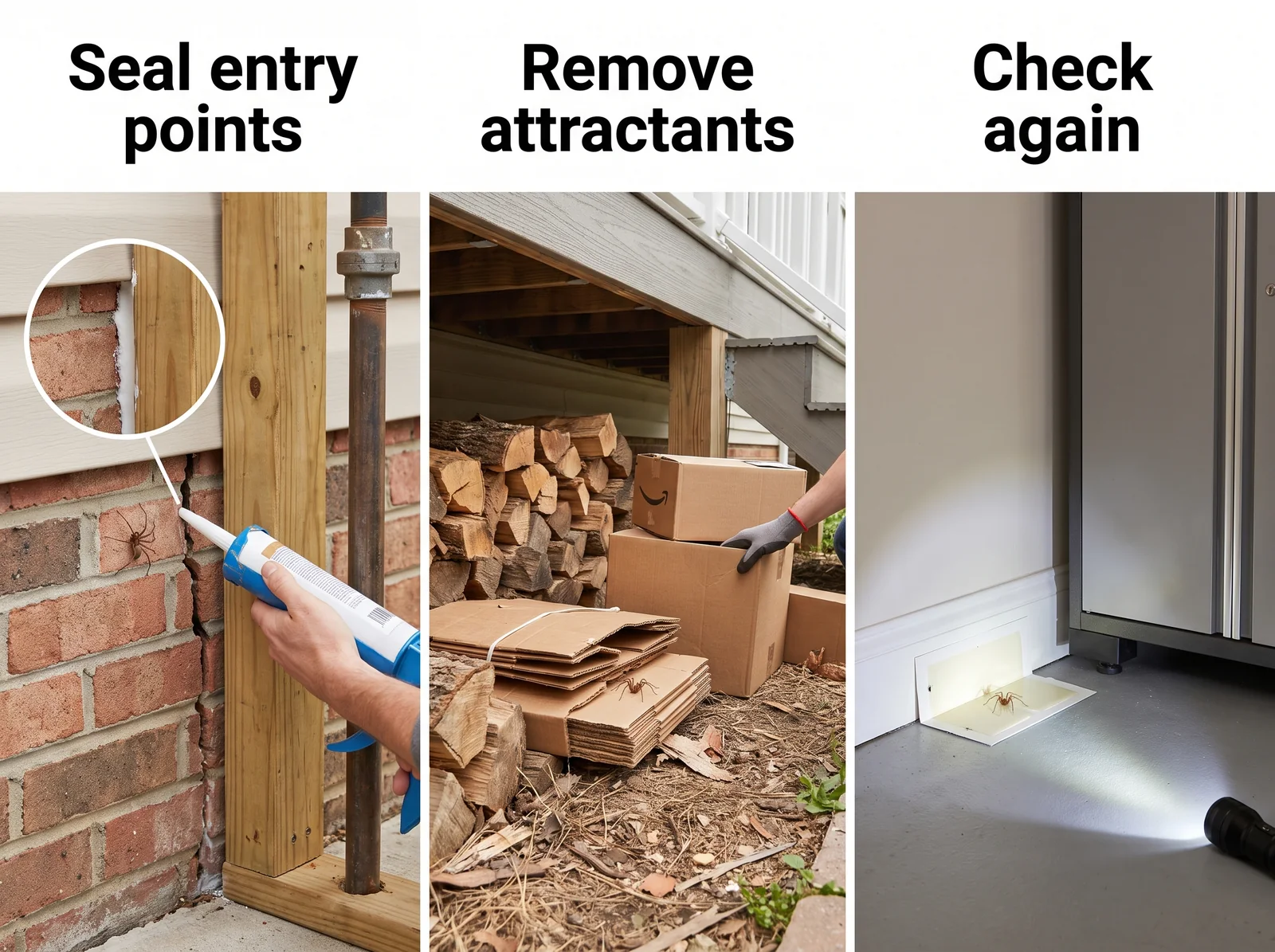
Brown recluse spiders squeeze through gaps as small as a dime's edge. Sealing cracks around windows, doors, baseboards, and where pipes or wires enter the house cuts off their main routes indoors.
Weatherstripping doors and adding door sweeps closes one of the most common entry paths. Pay close attention to areas near ground level, since these spiders travel low and prefer to stay close to the floor.
Useful strengths
- Reduces new spiders entering, not just the ones already inside
- Works alongside every other method with no added risk
- Also blocks other pests, drafts, and moisture
Limits to consider
- Doesn't address spiders already inside the home
- Some gaps, like those in old foundations, take real time to seal properly
#3
Reducing Indoor Prey and Sanitation
Best for: Homes with visible insect activity, especially crickets or other small bugs
Brown recluse spiders stay where there's food. If your home has other insects for them to eat, cleaning up crumbs, sealing food containers, and reducing moisture that attracts bugs takes away their food supply.
Regular vacuuming and dusting in corners, closets, and storage areas removes both insects and spider webs before a population can build up.
Useful strengths
- Lowers the food source that keeps spiders around
- Improves overall pest resistance in the home
- No cost beyond regular cleaning supplies
Limits to consider
- Won't remove spiders that are already well established
- Requires ongoing effort, not a one-time fix
#4
Sticky Glue Traps for Monitoring and Capture
Best for: Tracking activity along baseboards, closets, and storage areas
Glue traps placed along walls, in closets, and near storage boxes catch brown recluse spiders as they travel at night. They also tell you where activity is heaviest, which helps you focus cleanup and sealing efforts.
Check and replace traps every few weeks. A rise or drop in catches over time gives you a clear read on whether your other efforts are working.
Useful strengths
- Low cost and no chemicals involved
- Gives you real data on where spiders are active
- Easy to place in tight or hard-to-reach spots
Limits to consider
- Catches individual spiders but doesn't address the source
- Needs regular checking to stay useful
#5
Physical Removal by Vacuuming
Best for: Spot removal of spiders, egg sacs, and webs you can see
A vacuum with a hose attachment lets you remove spiders, webs, and egg sacs directly from corners, closets, and behind furniture without touching them. This is especially useful once you've decluttered and can see where they've been hiding.
Empty the vacuum canister or bag outside right after use so nothing survives inside the machine.
Useful strengths
- Immediate removal with no chemical exposure
- Works well on egg sacs before they hatch
- Pairs naturally with decluttering
Limits to consider
- Only removes what you can see and reach
- Not effective for spiders deep in wall voids
#6
Reducing Outdoor Harborage Near the Home
Best for: Yards with woodpiles, debris, or leaf litter close to the foundation
Brown recluse spiders often live outdoors in woodpiles, under bark, or in debris before moving inside. Keeping firewood off the ground and away from the house, and clearing leaf litter and debris near the foundation, reduces the population near your walls.
This matters most in the months before spiders typically move indoors, since fewer spiders outside means fewer finding their way in later.
Useful strengths
- Reduces the outdoor population feeding into your home
- Improves general pest control around the property
- No equipment needed beyond basic yard cleanup
Limits to consider
- Doesn't help with spiders already inside
- Requires seasonal upkeep to stay effective
#7
EPA-Registered Pesticide Products
Best for: Confirmed infestations that haven't responded to source removal and exclusion
If you've identified a real brown recluse problem and non-chemical steps haven't solved it, an EPA-registered pesticide labeled for spiders and for indoor use may help. Use only a product labeled for this pest and this site, and follow the complete label instructions exactly as written.
The label covers where the product can be used, how it should be applied, and what precautions to take around children and pets. Treat it as a required set of rules, not a suggestion.
Useful strengths
- Can reduce spider activity when paired with source removal
- Labeled products are reviewed for the pests and sites listed
- Available at most hardware and garden stores
Limits to consider
- Only works well when clutter and entry points are also addressed
- Must match the specific pest and site listed on the label
- Not a substitute for finding and removing the source
#8
Professional Pest Control Service
Best for: Confirmed infestations, repeated sightings, or homes where DIY steps haven't worked
A licensed pest control professional can inspect areas you might miss, like wall voids, crawlspaces, and attic spaces, and identify how widespread the problem really is. This matters with brown recluse spiders since they're often found deep in areas that are hard to check yourself.
Professionals also have access to treatment options and follow-up plans that go beyond what's practical for a homeowner to manage alone, especially in larger or older homes.
Useful strengths
- Thorough inspection of hard-to-reach areas
- Experience identifying brown recluse versus look-alike spiders
- Follow-up visits to confirm the problem is under control
Limits to consider
- Costs more than DIY approaches
- Scheduling and treatment may take more than one visit
How do brown recluse spiders get into homes?
Brown recluse spiders usually enter through small gaps around doors, windows, and foundations, or they arrive hidden in boxes, furniture, or firewood brought inside. Once in, they settle into quiet, undisturbed areas like closets, garages, attics, and basements.
They don't build webs to catch prey the way common house spiders do. Instead, they hunt at night and hide during the day, which is why sightings are often limited to occasional spiders rather than obvious webs.
What signs suggest you have a brown recluse problem?
The clearest sign is actually spotting a spider that matches the brown recluse's appearance: a tan to dark brown body with a darker violin-shaped marking on the back, and six eyes arranged in pairs rather than the usual eight. Occasional sightings in storage areas, especially at night, are common with a real infestation.
Finding egg sacs in undisturbed corners or repeated sightings in the same area over several weeks is a stronger signal than a single spider seen once. If you're not sure what species you're looking at, use a reliable identification resource before deciding on next steps.
When does this go beyond a DIY fix?
If you're finding multiple spiders repeatedly, especially in living areas rather than just storage spaces, or if someone in the home has been bitten, it's time to bring in a licensed pest professional. Bites can sometimes need medical attention, and a professional can confirm the scope of the infestation.
Large or older homes with extensive crawlspaces, wall voids, or structural gaps are also harder to fully address with DIY steps alone. A professional inspection can catch what a homeowner might miss.
Questions you may still have
Are brown recluse spiders dangerous?
Their bites can cause a wound that's slow to heal, and in rare cases lead to more serious reactions. Most bites cause localized redness and discomfort. If you suspect a bite, especially one that's worsening, painful, or not healing, contact a clinician rather than waiting to see what happens.
How can I tell a brown recluse from other spiders?
Look for a tan to dark brown body, a darker violin-shaped marking on the upper back, and six eyes arranged in pairs instead of the usual eight found on most spiders. If you're unsure, take a photo and use a reliable identification resource before deciding how to respond.
Do I need a pesticide to get rid of brown recluse spiders?
Not always. Decluttering, sealing gaps, and reducing prey often solve smaller problems. Pesticides can help with confirmed infestations, but only when you use an EPA-registered product labeled for spiders and for your specific site, applied exactly as the label directs.
How long does it take to get rid of a brown recluse infestation?
It depends on how established the population is. Light activity may improve within a few weeks of decluttering and sealing entry points. Larger infestations, especially in wall voids or crawlspaces, can take months and often need a licensed pest professional to fully resolve.