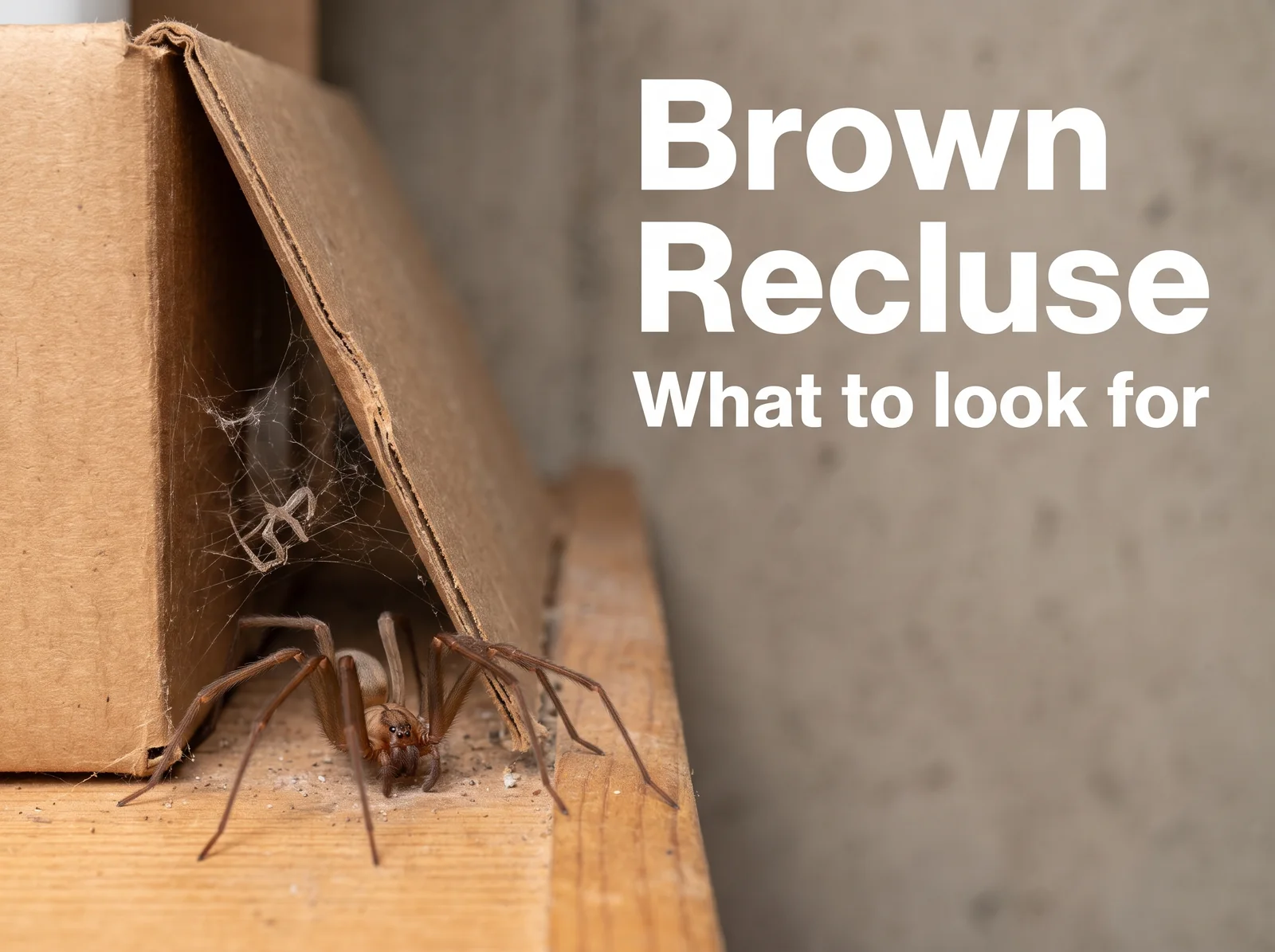
Where do brown recluse spiders hide outdoors?
Brown recluse spiders prefer dark, sheltered areas that remain undisturbed for long periods. In an outdoor setting, they seek dry environments that protect them from heavy rain, direct sunlight, and foot traffic.
You will often find them tucked beneath loose tree bark, inside stacks of firewood, under discarded lumber, or within hollow decorative landscaping stones. They also favor the protected spaces under low decks, beneath storage shed floors, and inside utility boxes attached to your home.
Unlike web-building spiders that sit in visible aerial webs, recluse spiders create loose, irregular retreats in tight crevices. Inspecting these hidden voids gives you a clear idea of where outdoor populations might be nesting.
Why are brown recluses attracted to your yard?
Outdoor pests need two primary resources to thrive: dependable shelter and an active food source. A yard with dense ground cover, unraked leaf piles, and miscellaneous storage provides endless microhabitats for hunting and hiding.
Exterior lighting also plays a major role. Bright porch and security lights pull in moths, beetles, and crickets at night. This steady buffet of prey encourages hunting spiders to build retreats right beside your exterior doors and windows.
Reducing outdoor insect activity directly lowers spider numbers. When you eliminate excess clutter and manage night lighting, you make your yard far less hospitable to nocturnal hunters.
How should you clear outdoor clutter safely?
Before you begin moving items stored outside, put on thick leather work gloves, long sleeves, and closed-toe shoes. Spiders bite when accidentally squeezed or pressed against skin, so protective clothing keeps your hands and arms safe during cleanup.
Work through storage areas methodically. Lift items by their edges rather than sliding your fingers underneath where a spider might rest. Relocate firewood piles at least twenty feet away from your foundation and elevate the logs off the dirt.
Dispose of old cardboard boxes, broken planters, loose tarps, and construction scraps. Once you eliminate flat materials resting directly on the soil, spiders lose their most dependable ground-level shelters.
How do you manage perimeter plants and landscaping?
Dense vegetation growing against exterior walls creates a sheltered highway for pests. Heavy ivy, tall grasses, and untrimmed shrubs trap moisture and block airflow, giving spiders a protected transition zone between your yard and home.
Cut back tree branches and heavy bushes so they sit at least two feet away from your siding and roofline. Prune low-hanging branches that touch the ground beneath ornamental plants.
Switch thick organic wood mulch near your foundation to crushed stone or gravel if possible. Wood mulch retains moisture and attracts soft-bodied insects, while dry stone creates a barrier that spiders prefer not to cross.
How do you seal exterior entry points?
Eliminating spiders outside helps prevent them from wandering indoors. Take time to inspect your exterior walls, foundation, and roofline for cracks and small openings.
Use silicone-based exterior caulk to seal gaps around plumbing pipes, gas lines, electrical conduits, and dryer vents. Check the sweeps on your exterior doors to ensure they seal tightly against the threshold without visible daylight.
Repair torn window screens and install fine wire mesh over crawlspace vents, attic louvers, and weep holes in brick siding. Sealing these access points forces outdoor spiders to stay outside where natural elements limit their spread.
What role do outdoor lighting changes play?
Standard incandescent and high-output white light bulbs act as beacons for flying insects. Brown recluses actively seek out these concentrated feeding grounds around doors, patios, and garage entryways.
Replace standard exterior bulbs with yellow insect-resistant bulbs or warm-toned LEDs, which emit wavelengths that attract far fewer flying insects. You can also place exterior fixtures on motion sensors rather than leaving them on all night.
If you need security illumination, position light poles away from your building walls and point the beams back toward the structure. This shift draws flying bugs away from your entry doors.
When should you apply exterior chemical treatments?
Physical exclusion, cleanup, and lighting changes should always be your first steps. If high populations persist around outbuildings, perimeter foundations, or under covered porches, a targeted exterior treatment can help.
Always choose an EPA-registered product specifically labeled for outdoor spider control and your specific application site. Carefully read and follow all label instructions regarding application methods, protective equipment, and drying times.
Apply products only to labeled areas, such as foundation cracks and sheltered outdoor voids. Avoid broad, random spraying over open lawn areas, which wastes material and harms beneficial yard organisms without reaching hidden spiders.
Questions you may still have
Can brown recluse spiders survive freezing winter temperatures outside?
Brown recluses can survive chilly weather by seeking deep shelter beneath rock crevices, soil voids, or under deep leaf litter. Their metabolic rate slows down during cold months, allowing them to remain dormant until spring warmth returns. However, prolonged sub-freezing exposure without shelter will kill them, which is why they seek protected spots near structures.
Do glue boards work for monitoring brown recluses outdoors?
Standard cardboard glue traps break down quickly outdoors due to humidity, rain, dust, and direct sunlight. While they are not practical for open yards, you can place moisture-resistant covered traps inside dry outdoor areas like storage sheds, garages, pump houses, or sheltered crawlspace entries to monitor spider numbers and identify activity zones.
Will pressure washing your exterior siding remove brown recluse spiders?
Pressure washing removes dust, dead insects, and loose retreat webbing from exterior walls, eves, and siding joints. While it temporarily disrupts hiding areas and washes away prey, it does not reach deep voids inside foundation cracks or wall spaces. Use washing as a sanitation step alongside sealing gaps and trimming yard vegetation.