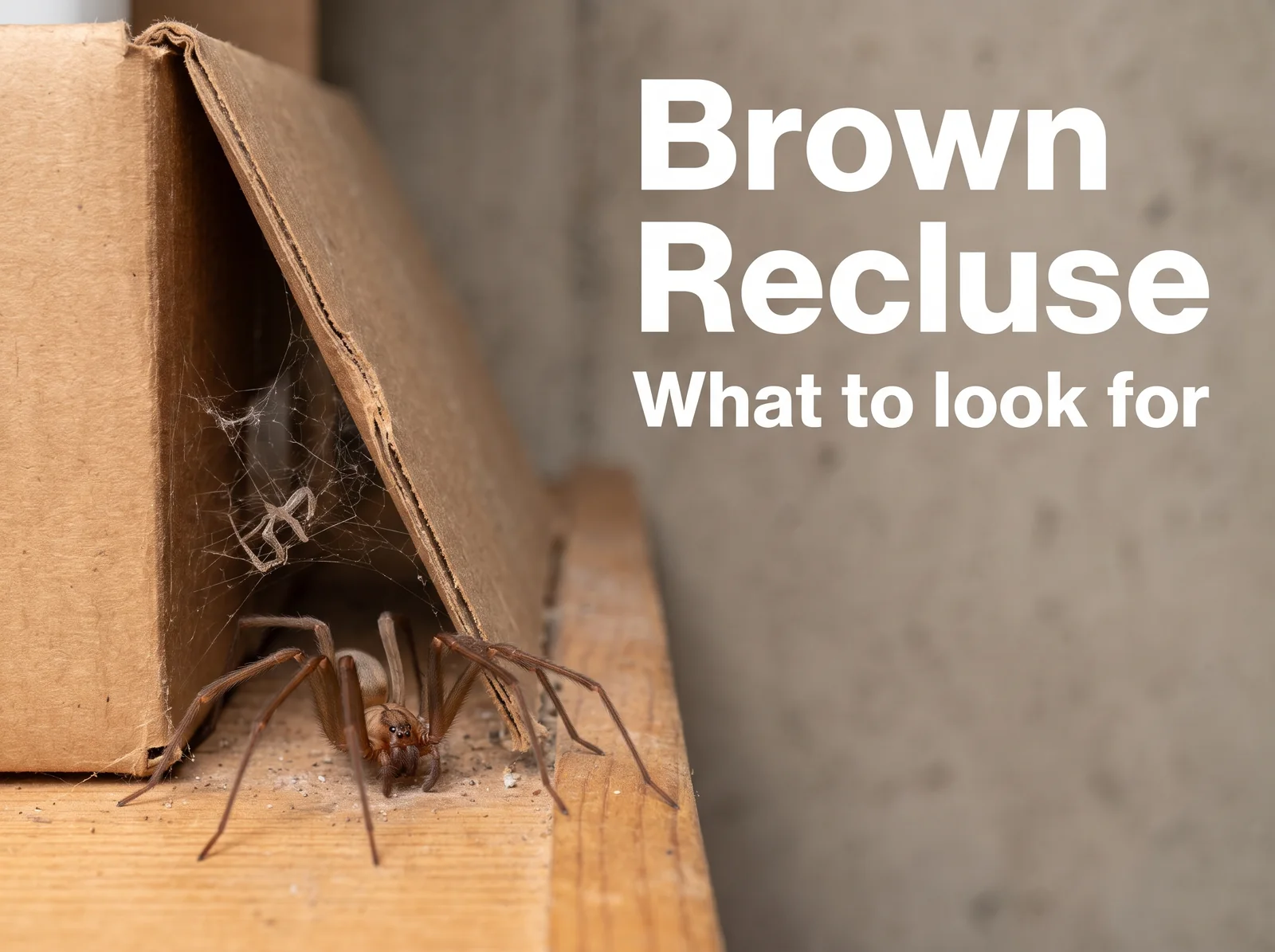
How do you know if brown recluses are in your house?
Confirming the spider's identity is your first step before starting any removal efforts. Brown recluse spiders have a uniform tan or light brown body, long thin legs without dark bands, and a dark violin-shaped marking behind their heads. Unlike most spiders that have eight eyes, they have six eyes arranged in three distinct pairs.
Because these spiders hide during daylight hours, you are more likely to find them on sticky traps than walking across open floors. Check quiet, dark storage areas where they feel secure, such as behind furniture, inside rarely opened closets, and around basement floor joists.
- Uniform yellowish-brown to tan coloring across the body and legs
- Dark violin mark pointing toward the abdomen
- Six eyes arranged in three pairs instead of eight eyes
Why are brown recluses attracted to indoor spaces?
Brown recluse spiders enter structures seeking dry shelter, quiet hiding voids, and a steady food supply of other small insects. Cardboard boxes offer ideal nesting conditions because the layers mimic the dead tree bark and rock crevices they use outdoors.
Homes with high humidity, cluttered storage zones, or minor insect problems give these spiders everything they need to settle in. Silverfish, crickets, and carpet beetles all serve as reliable prey, so reducing general insect activity directly makes your home less inviting to spiders.
Where should you place sticky traps to catch them?
Flat glue boards are one of the most effective tools for tracking and reducing brown recluse numbers. Position traps flat against baseboards, behind large furniture, under beds, and along the edges of closets. Spiders move along walls rather than crossing open center floors.
Check your traps weekly to see which rooms have the highest activity. Traps not only catch wandering spiders directly, but they also highlight where you need to focus deep cleaning, structural repairs, or professional help.
- Along interior baseboards in bedrooms and closets
- Next to foundation walls in basements and crawlspaces
- Behind storage tubs, dressers, and utility appliances
How can you change storage habits to stop them?
Cardboard boxes are a top harborage source for brown recluse populations. Replace all cardboard storage containers with clear plastic bins that have tight-fitting lids. This simple change removes hiding cavities and stops spiders from slipping between stored items.
Keep storage bins elevated off the floor and away from walls whenever possible. In living rooms and bedrooms, pull bed skirts away from floors and avoid storing loose linens or clothing piles beneath bed frames.
What entry points should you seal around the home?
Exclusion stops new spiders and prey insects from entering your living space from outdoors or crawlspaces. Inspect your home exterior for cracks in the foundation, gaps around plumbing pipes, and spaces under exterior doors.
Install tight-fitting door sweeps on all exterior entrances, including the door connecting an attached garage to the house. Use silicone-based caulk to seal openings around wire penetrations, window frames, and outdoor hose bibs.
- Attach durable weatherstripping and sweeps under all exterior doors
- Seal foundation cracks and utility pipe openings with caulk
- Repair torn window screens and loose crawlspace access covers
How does deep cleaning reduce their food and harborage?
Thorough vacuuming removes stray spiders, egg sacs, and the harmless insects they hunt. Use a narrow vacuum attachment to clean deep into corners, under heavy appliances, inside closet corners, and along baseboard gaps.
Dispose of the vacuum bag or empty the canister into a sealed outdoor trash bin right after cleaning. Regular dusting and decluttering disrupt the undisturbed conditions that brown recluses need to establish long-term populations.
When should you consider pesticide treatments?
If heavy trap counts continue after you have cleaned, sealed entry points, and reorganized storage, targeted chemical treatments may help. If you apply a pesticide, use only an EPA-registered product labeled specifically for spiders and the target site, following all label directions closely.
Dusts or residual sprays applied inside wall voids, unfinished basements, and attic eaves reach spaces where spiders hide. For widespread indoor infestations, partnering with a licensed pest control professional ensures treatments are placed safely and effectively.
Questions you may still have
Can brown recluse spiders climb into beds easily?
Brown recluse spiders are not strong climbers on smooth surfaces, but they can climb textured bed skirts, dangling blankets, or wires touching the floor. Moving beds a few inches away from walls and keeping bedding from touching the floor prevents them from wandering into your sleeping area.
What is the fastest way to lower brown recluse numbers indoors?
Placing dozens of glue boards along baseboards while removing cardboard storage boxes yields the fastest drop in activity. Traps capture moving spiders continuously without spreading residues, while removing cardboard forces hiding spiders into the open where traps catch them.
Do brown recluses spin large webs to catch prey?
No, brown recluse spiders do not build classic orb webs to catch flying insects. They produce irregular, loose web strands in hidden crevices primarily for resting and protecting egg sacs, doing most of their hunting by roaming along surfaces at night.