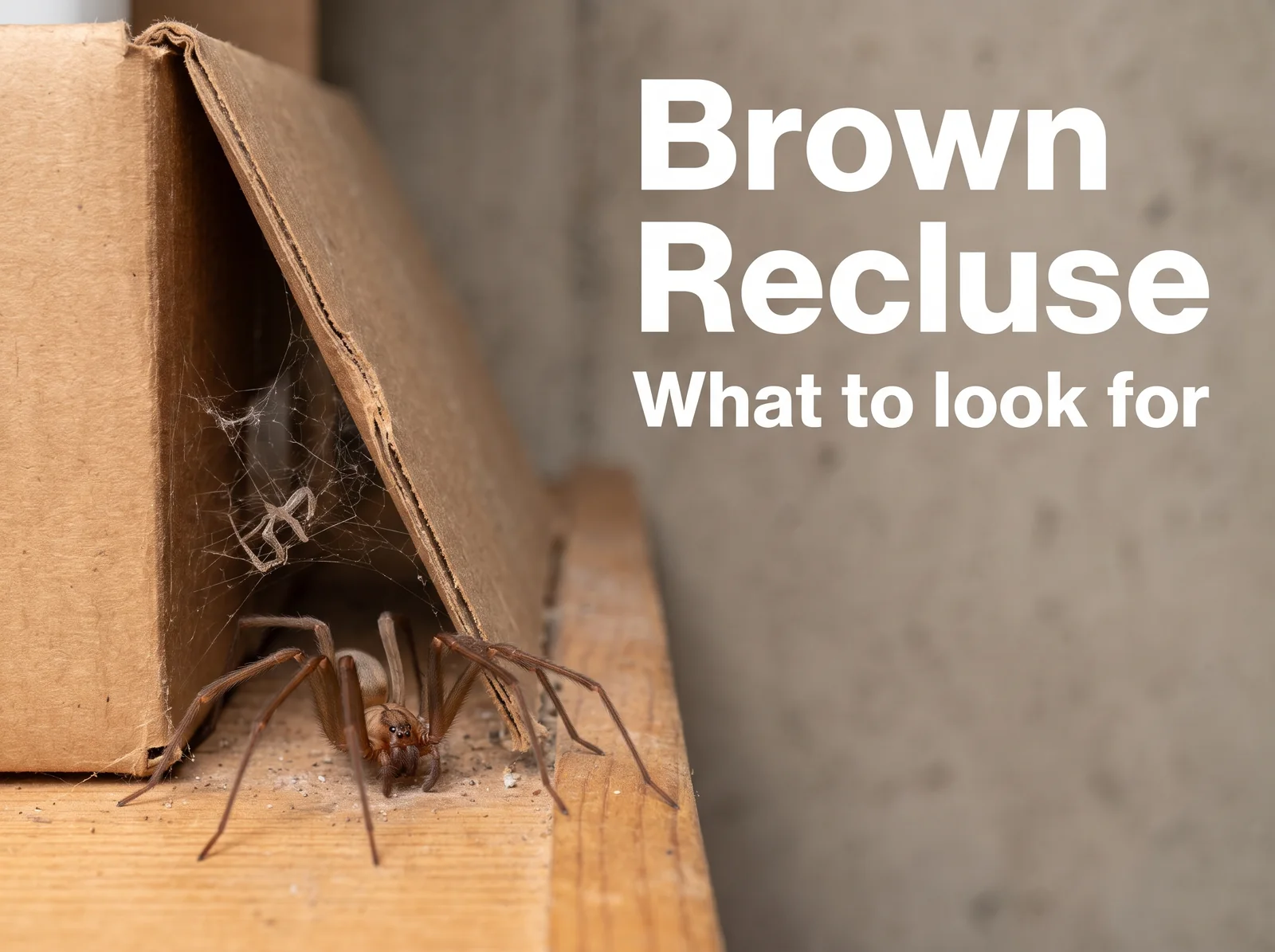
How do you confirm brown recluse spiders are in your home?
Before you begin any management plan, make sure you are dealing with an actual brown recluse. These spiders are uniformly tan to dark brown with long, slender legs and lack stripes, bands, or spines. Their most famous feature is the dark, violin-shaped marking on the top of the cephalothorax, with the neck of the fiddle pointing toward the abdomen.
Unlike most common house spiders that possess eight eyes arranged in two rows, the brown recluse has only six eyes arranged in three pairs, called dyads. Because getting close enough to count eye pairs can be risky, capturing a specimen on a glue board allows you or an expert to verify the species safely without handling live pests.
- Check sticky traps with a magnifying glass to look for six eyes in three pairs.
- Look for a consistent sandy-brown color with no mottled patterns on the legs.
- Note the dark fiddle marking resting behind the head region.
Where should you look for indoor hiding spots?
Brown recluse spiders avoid light and active foot traffic, seeking out dry voids that remain undisturbed for months. In main living quarters, check behind baseboards, under furniture, inside rarely worn shoes, and behind wall hangings. Closets filled with packed clothing or floor storage provide ideal harborage.
Utility spaces often harbor the largest numbers. Attics with exposed insulation, unfinished basements, crawlspaces, and furnace closets give them quiet shelter and access to structural gaps. Cardboard storage boxes are especially attractive to them because the corrugated layers mimic natural crevices found under tree bark and rocks.
- Inspect the underside of beds, couches, and upholstered chairs.
- Examine storage spaces, particularly stacks of cardboard boxes and old linens.
- Look inside utility panels, crawlspace access doors, and water heater closets.
Why is decluttering your most effective removal tactic?
Recluses thrive in cluttered environments because every extra box, bag, or pile creates a protected microhabitat. When you eliminate clutter, you remove the physical shelter that allows these spiders to build reproducing populations indoors. A clean, open layout forces them out of living quarters and into areas where monitoring traps can catch them.
Switching from cardboard boxes to clear plastic storage bins with tight-sealing lids makes an immediate difference. Plastic containers keep spiders from crawling inside stored items and make seasonal inspections simple. Keep items off closet floors, hang clothing on racks, and store shoes in hanging organizers rather than leaving them loose.
- Replace corrugated cardboard boxes with latching plastic totes.
- Store clothing, blankets, and seasonal fabrics off closet floors.
- Clear out old magazines, scrap lumber, and unused household items.
How do sticky traps help manage an infestation?
Flat glue boards and sticky traps are essential tools when dealing with brown recluse spiders. Because these hunting spiders wander along edges at night searching for prey and mates, placing glue boards along baseboards intercepts them effectively. Traps provide continuous passive removal without releasing chemicals into your air.
Glue boards also serve as diagnostic tools. By checking which traps catch the most spiders, you pinpoint specific entry routes or heavily infested rooms. Number your traps and record their locations so you can evaluate population trends over several weeks and adjust your removal efforts accordingly.
- Place traps flat against walls, behind furniture, and inside closet corners.
- Position boards along baseboards in dark corners of basements and attics.
- Replace full or dusty boards promptly to maintain catching power.
How do you seal entry points to keep them out?
Long-term control requires keeping outside spiders from migrating into your living areas. Inspect the exterior foundation and siding for gaps, utility line penetrations, and loose weep screeds. Use silicone-acrylic caulk or expanding foam to seal cracks where outdoor spiders might slip indoors during seasonal weather shifts.
Focus on doors and ground-level windows. Install tight-fitting door sweeps on exterior entryways, garage access doors, and basement exits. Replace torn window screens and install mesh covers over foundation vents to block entry while preserving necessary home ventilation.
- Install durable sweeps along the bottom of all exterior doors.
- Caulk gaps around outdoor spigots, cable lines, and dryer vents.
- Repair damaged window screens and crawlspace vent covers.
What sanitation steps reduce spider food sources?
Spiders cannot sustain high populations without an ample supply of prey insects. When you reduce indoor populations of silverfish, crickets, roaches, and carpet beetles, you naturally limit spider numbers. Routine sanitation and general pest prevention starve spiders out of your house over time.
Vacuum carpets, baseboards, and dark corners frequently using an attachment to remove stray webs, egg sacs, and resting insects. Empty your vacuum canister into an outdoor trash bin immediately after cleaning. Outdoors, switch exterior porch lights to yellow bug bulbs to prevent insects from swarming near entry doors.
- Vacuum along baseboards, under heavy furniture, and inside closets regularly.
- Address indoor moisture issues that attract silverfish and booklice.
- Use yellow insect bulbs near exterior doorways to reduce night-flying prey.
When should you consider professional treatment options?
If you consistently find brown recluse spiders on glue traps throughout multiple living areas despite rigorous cleaning and sealing, chemical applications may be warranted. Brown recluse spiders walk with their bodies held high on long legs, meaning standard surface sprays often fail because the spider picks up very little residue.
When pesticides are necessary, select an EPA-registered product explicitly labeled for spiders and indoor residential use, and follow every label instruction precisely. For heavy or widespread infestations in wall voids and attics, hiring a licensed pest control professional ensures materials reach deep harborages safely and effectively.
- Use only EPA-registered products labeled for the exact application site.
- Never apply broadcast sprays across open living room or bedroom floors.
- Call a licensed professional for dusting deep wall voids and tall attics.
Questions you may still have
Can brown recluse spiders climb into my bed?
Brown recluse spiders can climb textured surfaces like bed skirts, trailing blankets, or wooden legs, though they are poor climbers on smooth plastic or metal. To protect yourself, pull your bed at least eight inches away from the wall, remove bed skirts, and keep comforters from touching the floor. Always shake out bedding and clothing before use.
How long can brown recluse spiders survive indoors without food?
Brown recluse spiders are remarkably resilient and can survive for six to ten months without food or water in moderate indoor conditions. This high tolerance explains why starving them out requires patience and why combining multiple methods like physical exclusion, deep sanitation, and continuous glue trapping is necessary to eliminate a home infestation completely.
Do bug bombs work for brown recluse spiders?
Total release foggers, or bug bombs, are generally ineffective against brown recluse spiders. Aerosol fogs fill open room air but fail to penetrate the deep wall voids, insulation, and closed storage boxes where recluses hide. In fact, fogger residues can agitate spiders, causing them to scatter outward into living areas.