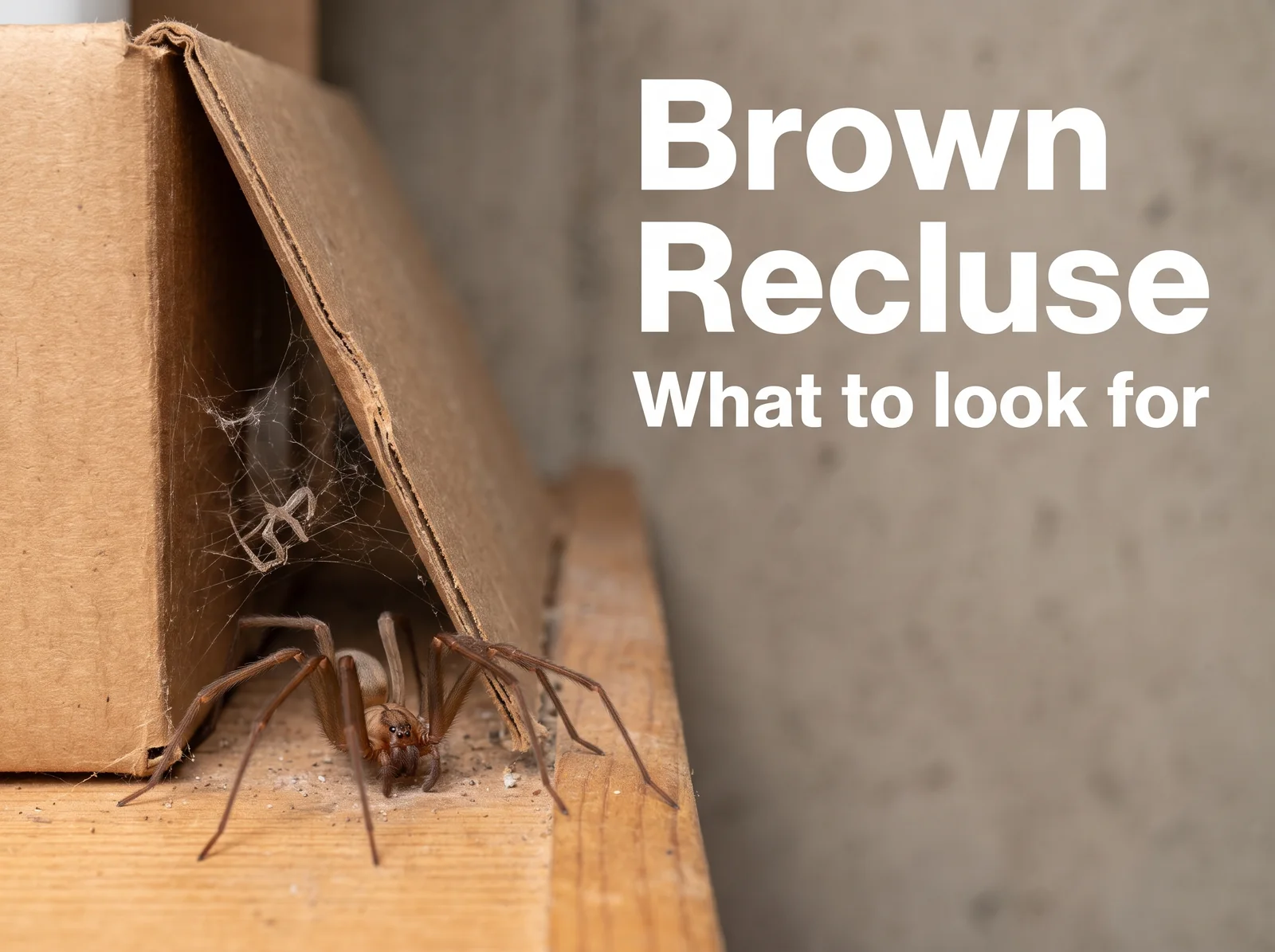
Why are brown recluse spiders entering your apartment unit?
Apartment buildings offer brown recluse spiders an endless network of quiet hiding spots. Shared plumbing lines, electrical chases, and adjacent wall voids allow pests to move freely between neighboring units, utility closets, and shared basements.
Your unit might attract them if it provides easy access to food and shelter. Other common household insects serve as prey, while stacked cardboard boxes, laundry piles, and dark closet corners create dry, undisturbed shelter where these spiders thrive.
How should you talk to your landlord or property manager?
Notify your property manager or landlord in writing as soon as you spot an unconfirmed or confirmed brown recluse. Because spiders move through shared walls, treating only one room or a single apartment rarely resolves an infestation across the property.
Ask management to send a licensed pest professional who understands multi-unit structural pests. Keep photographic evidence or captured specimens in a sealed jar to help the pest management technician accurately identify the species before treatment begins.
What is the best way to inspect your rental without getting bitten?
Always wear thick work gloves, long sleeves, and closed-toe shoes when inspecting dark storage areas. Use a bright flashlight to look behind furniture, around baseboards, and inside rarely opened storage closets.
Never slide bare hands blindly under furniture, behind headboards, or into dark storage bins. Brown recluse spiders prefer tight, dry spaces where they will not be disturbed, so move items slowly and carefully during your check.
- Inspect behind baseboards and under bedroom furniture.
- Check inside closet corners, shoes, and hanging garment bags.
- Look around water heater closets and plumbing access panels.
How can you isolate your bedroom and sleeping space?
Creating a physical barrier around your bed significantly lowers your risk of an accidental bite while sleeping. Pull your bed frame at least eight to twelve inches away from the wall, and remove any bed skirts that touch the floor.
Keep blankets, sheets, and comforters tucked up so they do not drag on the carpet. Avoid storing shoes, extra linens, or clutter directly beneath your bed frame, as clear floor space discourages spiders from wandering upward.
Which storage habits help keep spiders out of your belongings?
Cardboard boxes are porous and provide ideal harborage for recluse spiders. Replace all cardboard storage containers in your closets and storage units with smooth, clear plastic bins that have tight-fitting, snap-on lids.
Always shake out clothing, coats, and footwear before putting them on, especially if items have been sitting in a dark closet for several weeks. Store off-season garments inside sealed plastic bags to prevent spiders from crawling inside.
Where should you place sticky traps across your apartment?
Sticky glue boards are one of the most effective non-chemical tools for multi-unit dwellings. Place flat glue traps along baseboards, behind the toilet, under sinks, next to exterior doors, and on either side of closet entries.
Check traps weekly to gauge spider activity and track where they enter your rooms. Traps serve double duty by catching other insects that brown recluses hunt, which naturally reduces their available food supply inside your home.
- Set traps flat against wall perimeters where spiders travel.
- Place monitors behind appliances and inside dark closets.
- Replace dusty traps every few months to maintain stickiness.
How can you seal small entry points along shared walls?
Brown recluses often slip through tiny gaps around radiator pipes, sink drains, and electrical switch plates. Check with your landlord about using removable caulking or foam tape to seal gaps around plumbing penetrations under sinks.
Install simple draft stoppers or door sweeps at the bottom of your front entry door if it opens to an indoor hallway. Sealing these minor gaps keeps pests from easily walking between neighboring units.
What should you know about pesticide use in multi-unit buildings?
Over-the-counter bug sprays and aerosol foggers are often ineffective against brown recluses and can scatter spiders deeper into wall voids. If pesticides are used, rely on property management to hire a licensed pest control professional.
When applying any household product yourself, use only an EPA-registered product labeled specifically for spiders and residential indoor sites. Always follow every instruction on the label, keeping children and pets away until treated surfaces are completely dry.
Questions you may still have
Can brown recluse spiders travel through apartment air vents?
Yes, spiders can wander into heating or air conditioning ducts, especially if vents lack fine mesh screens. Fastening temporary screen mesh behind register covers helps block pests from dropping into rooms from shared ductwork.
Should you hire your own exterminator or wait for your landlord?
Always notify your landlord first, as lease agreements typically govern chemical treatments and vendor access. If management is slow to act, ask for permission in writing before hiring a licensed pest technician yourself.
Will routine vacuuming help control spiders in an apartment?
Regular vacuuming removes wandering spiders, egg sacs, webs, and prey insects. Use an attachment hose along baseboards and behind furniture, then promptly empty the canister or bag into an outdoor dumpster.