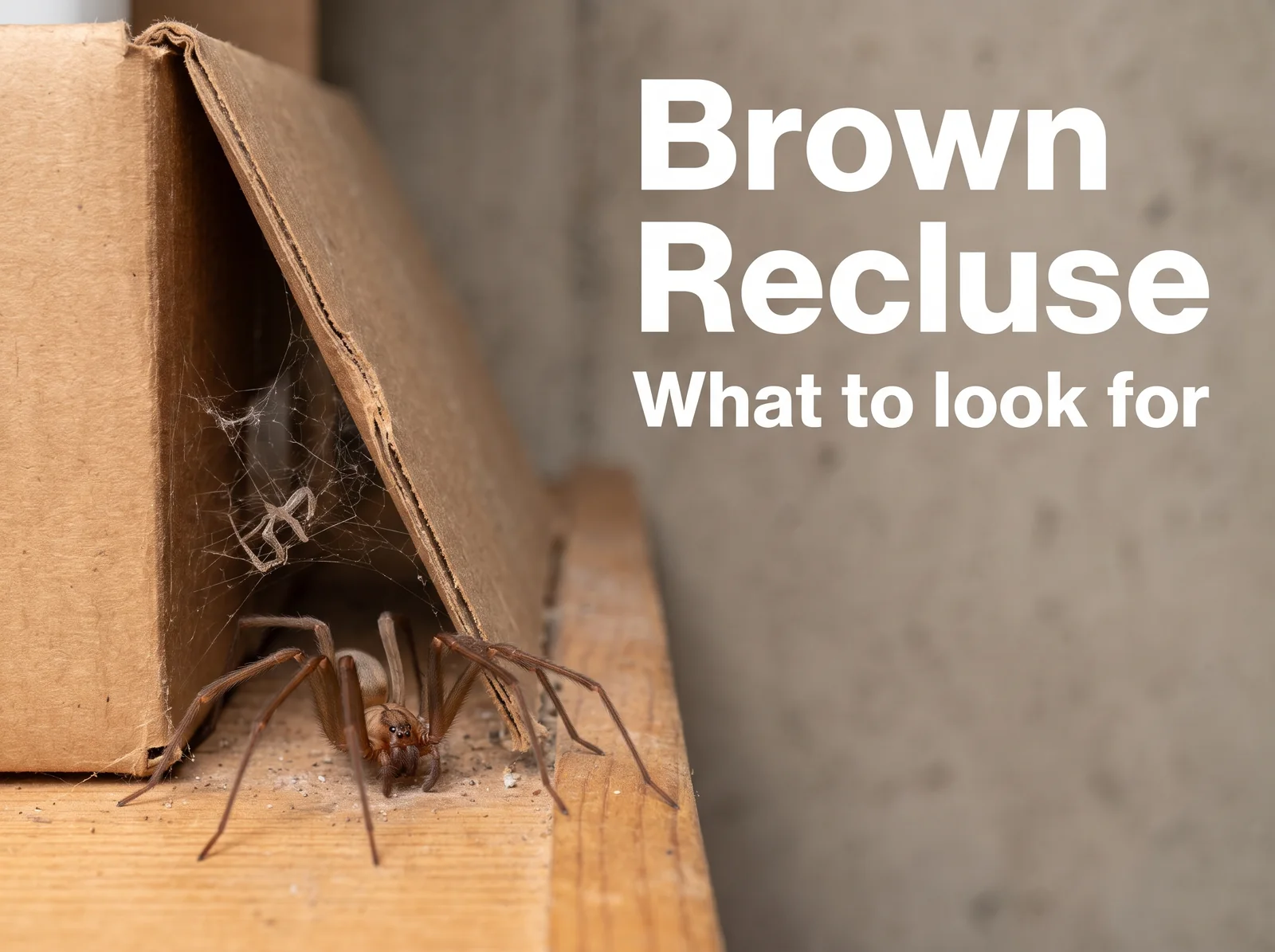
Why are brown recluse spiders in your yard?
Brown recluse spiders live outdoors naturally across their native range in the central and southern United States. They hunt living prey at night and spend daylight hours hiding from predators, direct sun, and heavy moisture.
Your yard offers ideal habitat when it contains dry, undisturbed spaces packed with small insects. When outdoor spaces provide both reliable shelter and food, these spiders can establish stable populations close to your house.
- Stacked cordwood resting directly on bare soil.
- Loose bark, fallen branches, and dense leaf litter.
- Undisturbed outdoor storage sheds, junk piles, and unused planters.
Where should you look during an outdoor inspection?
Start your search around the immediate perimeter of your home. Focus on dark, dry voids where items meet the ground or rest against exterior siding.
Wear heavy leather work gloves and sturdy boots before checking these areas. Use a bright flashlight to inspect crevices without sticking your bare fingers into hidden recesses.
Check beneath patio furniture, under wooden deck stairs, inside crawl space vents, and around gas meters or utility boxes. Look for irregular, thread-like webbing rather than circular, geometric webs.
How do you eliminate outdoor hiding spots?
Physical cleanup is the most effective way to drive spiders away from your landscape. When you remove their preferred shelter, spiders naturally move away to find better cover.
Move stacked firewood at least twenty feet from exterior walls and elevate the logs off the dirt using metal racks. Cut back overgrown ground covers, shrubs, and tall grass that touch foundation walls.
- Rake up dried leaves, pine needles, and decayed organic mulch.
- Discard empty cardboard boxes, broken flowerpots, and scrap lumber stored outside.
- Store lawn equipment on raised shelving inside organized outbuildings.
How does outdoor insect control help?
Spiders establish themselves in yards that feature high insect activity. By cutting down on the insect population around your property, you remove the food source brown recluses need to thrive.
Standard incandescent yard and porch lights attract moths, beetles, and midges throughout the evening. This constant swarm draws predatory spiders directly toward doorways and window frames.
Switch exterior lighting to warm-colored yellow bug lights or motion-activated fixtures. Fix leaky exterior hose spigots and ensure downspouts direct moisture away from foundation soil to deter soft-bodied moisture pests.
How can you stop yard spiders from entering the house?
Once you disturb outdoor shelters, displaced spiders will look for new harborages nearby. Creating a tight physical barrier ensures they do not simply shift from your yard into your living spaces.
Inspect your foundation, exterior doors, and low windows for entry points. Install sturdy door sweeps that contact the threshold evenly and replace brittle weatherstripping around garage doors.
- Fill foundation cracks and pipe penetrations with silicone-acrylic caulk.
- Cover exterior crawl space vents and soffits with fine wire mesh.
- Repair holes or tears in ground-level window and porch screens.
When should you consider outdoor perimeter treatments?
Sanitation and exclusion solve most outdoor recluse issues, but persistent populations around building perimeters may warrant targeted chemical management.
If you use pesticides, select only an EPA-registered product labeled specifically for spiders and exterior structural perimeter application. Read and follow the complete manufacturer label for proper use, environmental precautions, and re-entry timing.
Apply products directly to resting surfaces around foundation bands, weep holes, and window wells rather than broadcasting chemicals widely over open turf, which kills beneficial insects and rarely reaches hidden spiders.
What safety precautions protect you during yard work?
Brown recluses bite defensively only when trapped against human skin. Everyday yard maintenance can present risks if you reach blindly into sheltered zones.
Always wear durable work gloves, long pants tucked into socks, and closed-toe shoes when moving debris or cleaning outbuildings. Shake out garden footwear, tarps, and work gloves that have been stored in the garage or shed before putting them on.
Questions you may still have
Can brown recluse spiders survive winter in an open yard?
Outdoor brown recluses survive winter by seeking deep crevices beneath tree bark, under rock ledges, or within structural voids where temperatures remain moderated. They enter a state of reduced activity and emerge during warm spring days to resume hunting.
Does mowing the lawn regularly reduce outdoor spiders?
Yes. Keeping turf mowed short removes protective cover, exposes spiders to daylight and natural predators like birds, and eliminates humid microclimates that attract prey insects close to the ground.
Are sticky traps useful for outdoor yard control?
Sticky traps do not hold up well to outdoor rain and dirt, but they work exceptionally well when placed inside covered sheds, garages, crawl spaces, and along interior foundation perimeters to monitor spider movement from the yard.