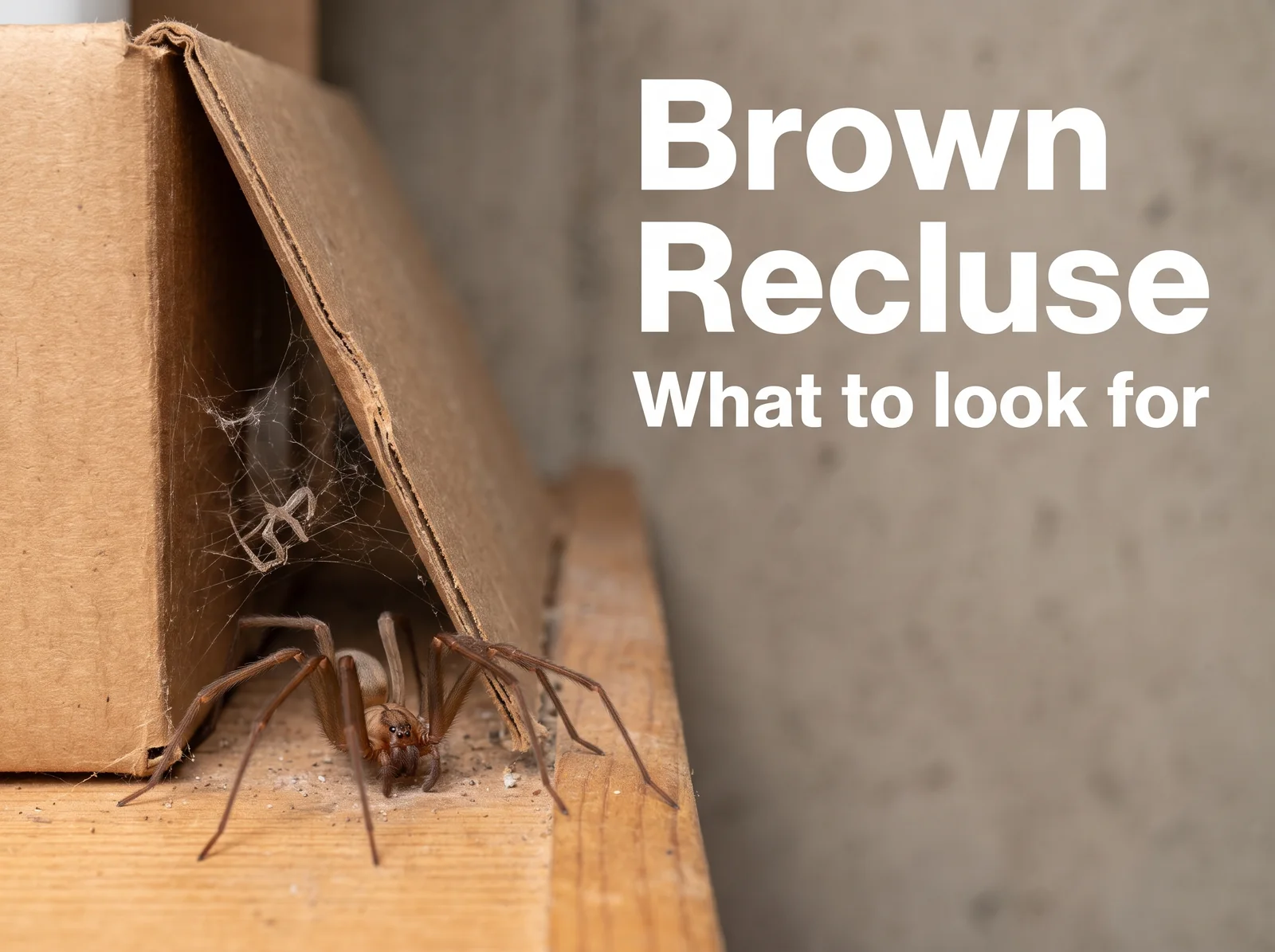
How do you know if you have brown recluse spiders?
Confirming the identity of your pest is the first step before taking action. A brown recluse is typically tan to dark brown with a distinct dark violin-shaped marking behind its head. Unlike many common house spiders that have eight eyes in two rows, the brown recluse has six eyes arranged in three pairs.
They build irregular, non-symmetrical webs in hidden areas rather than large, neat webs out in the open. You are most likely to find them in dry, undisturbed zones like storage boxes, behind baseboards, or within wall voids.
- Six eyes arranged in three distinct pairs
- Uniformly colored legs without bands or heavy spines
- Dark violin pattern on the cephalothorax
Where should you place sticky traps to catch them?
Flat glue boards are one of the most effective tools for tracking and capturing brown recluse spiders. Because these spiders roam at night seeking prey, placing traps along their travel routes yields quick results. Focus on the perimeter of rooms where floors meet baseboards.
Position traps behind large furniture, under beds, inside closets, and near plumbing access panels. Check the boards weekly to count captured spiders and identify which rooms have the highest population density.
- Along baseboards and behind dressers
- Inside dark storage closets and under stairwells
- Near furnace rooms and water heater corners
Why is indoor decluttering essential for control?
Brown recluse spiders thrive in undisturbed clutter because it provides shelter and hunting grounds. Cardboard boxes are especially attractive to them because the corrugated layers mimic natural crevices like rotting bark or rock piles.
Transition your stored items from cardboard into airtight plastic bins with secure lids. Keep clothes, blankets, and shoes off the floor, and pull your bed frames several inches away from bedroom walls to prevent wandering spiders from climbing into your bedding.
- Replace cardboard storage boxes with clear plastic totes
- Remove stacks of old newspapers, magazines, and bags
- Shake out stored clothing, towels, and boots before use
How do you seal your home to prevent their entry?
Physical exclusion keeps spiders from moving between wall voids, crawlspaces, and your active living areas. Inspect the exterior foundation of your house for small gaps where utility lines, cables, and pipes enter the structure.
Apply silicone-based caulk around window frames, install door sweeps along exterior doors, and check that attic vents have intact, fine wire mesh. Inside the home, seal gaps around baseboards, switch plates, and under sinks to keep spiders confined within exterior wall voids.
- Install tight-fitting door sweeps on all exterior doors
- Caulk gaps around plumbing lines and electrical conduits
- Repair torn window screens and loose crawlspace covers
What outdoor clean-up steps reduce spider pressure?
The area immediately surrounding your foundation sets the stage for indoor pest problems. Brown recluse spiders often live in woodpiles, rock walls, and landscape debris outside, migrating indoors as temperatures shift or food sources dwindle.
Move firewood piles at least twenty feet away from your foundation and elevate them off the ground. Trim back tree branches, shrubs, and ivy that touch your siding or roofline to eliminate natural bridges that allow spiders to enter through upper vents.
- Stack firewood away from exterior walls
- Trim dense groundcover and shrubs back from siding
- Clear away rotting leaf piles and scrap lumber
How does eliminating prey insects help?
Spiders establish themselves in homes where they have a reliable food supply. A brown recluse feeds on small insects such as silverfish, crickets, roaches, and carpet beetles. If your home has an active insect population, spiders will stay and reproduce.
Reduce general insect activity by drying up indoor moisture issues, fixing dripping pipes, and using a dehumidifier in basements. Switch exterior lights to yellow bug bulbs to avoid attracting nighttime flying insects that draw hungry spiders toward entry points.
- Fix leaky faucets and reduce basement humidity
- Vacuum baseboards regularly to remove insect carcasses
- Use yellow insect-resistant bulbs on exterior fixtures
When are pesticide treatments appropriate?
When sanitation and physical exclusion do not bring numbers down, chemical options can serve as a targeted supplement. Over-the-counter aerosol foggers are not recommended because they scatter spiders deeper into walls rather than reaching their hidden harborages.
If you choose to apply a pesticide, select only an EPA-registered product labeled specifically for spiders and the indoor site you are treating. Dust formulations placed deep into wall voids or cracks behind baseboards work best, always applied in strict accordance with the product label.
- Avoid total-release foggers that scatter spiders
- Target cracks and wall voids rather than open surfaces
- Follow every safety instruction listed on the label
Questions you may still have
Can you vacuum up brown recluse spiders safely?
Yes, using a vacuum with a hose attachment is a great non-chemical way to remove visible spiders, egg sacs, and webs immediately. To prevent accidental escapes, empty the canister or dispose of the vacuum bag in a sealed plastic trash bag outside right after cleaning.
How long can a brown recluse survive without food?
A brown recluse spider is exceptionally resilient and can survive for six to ten months without food or water in mild conditions. This endurance is why ongoing trapping, structural exclusion, and reducing overall insect prey over several consecutive months are necessary to eliminate an infestation.
Do essential oils repel brown recluse spiders?
Essential oils like peppermint or tea tree provide weak, temporary deterrent effects at best and will not control an established infestation. Relying on scent sprays allows spider populations to continue multiplying undisturbed behind walls and inside storage boxes.