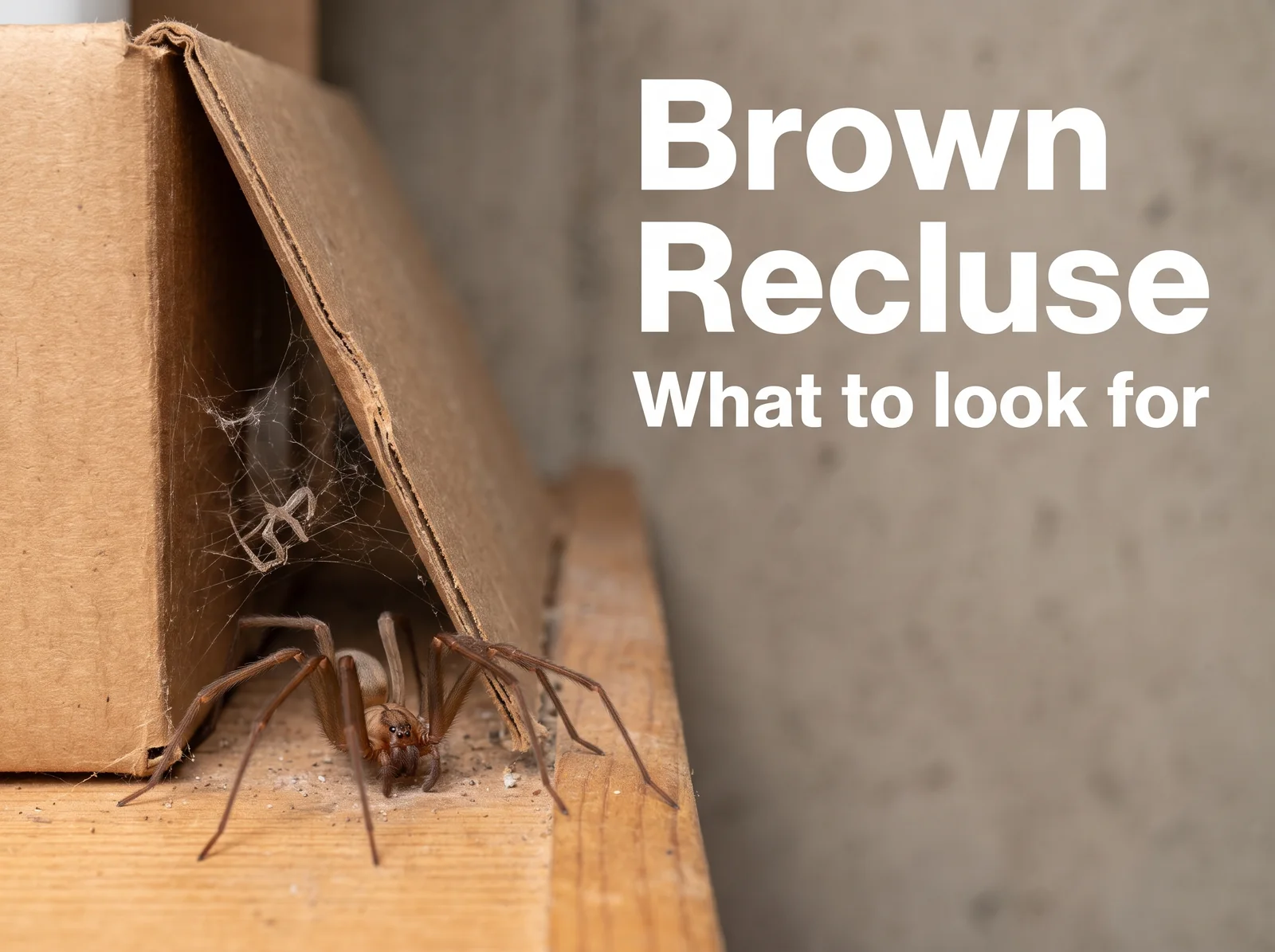
What do brown recluse spider webs look like?
Brown recluse webs look very different from the classic wheel-shaped webs created by common garden spiders. A brown recluse builds an irregular, loose, and tangled mat of sticky grayish-white silk. It often looks like a messy patch of cotton webbing tucked flat against a surface rather than an elaborate trap suspended in the middle of a room.
These spiders are active night hunters that roam across floors and walls to search for prey. Because they do not rely on silk to snare flying insects, their webs function strictly as daytime shelters, egg-laying sites, and protective retreats. If you spot a neat, symmetrical web hanging in a window or across a ceiling corner, it belongs to a completely different spider species.
Where do you typically find brown recluse webbing?
Because these spiders avoid daylight, drafty corridors, and high foot traffic, their webs stay tucked inside dark, quiet structural voids. You are most likely to find them in undisturbed spaces where clutter provides natural cavities.
When checking your home, focus your attention on low-traffic zones where items sit untouched for months at a time.
- Inside dry crawl spaces, unfinished basements, and attic insulation voids.
- Behind baseboards, wall paneling, and unused furniture stored in utility rooms.
- Between stacked cardboard storage boxes in garages and closets.
- Underneath water heaters, workbench framing, and heavy stored equipment.
How should you safely clear existing webbing?
Before you clean up any suspect webs, protect yourself by wearing work gloves, long sleeves, and closed-toe shoes. Never reach your bare hands into dark crevices, box handles, or narrow gaps where a resting spider might hide within its silk.
The most effective removal tool is a vacuum cleaner fitted with a rigid wand attachment or a disposable duster head. Vacuuming immediately sucks up the web, the spider, and any attached egg sacs without forcing you into direct contact. After vacuuming, take the machine outside, seal the vacuum bag or canister contents in a heavy plastic bag, and dispose of it in an outdoor trash bin immediately.
Why does removing clutter eliminate web sites?
Brown recluses thrive in man-made clutter because it creates countless tight crevices that mimic tree bark, rock piles, and natural ground cavities. Every stack of loose paper, pile of lumber, or wall of cardboard boxes offers dozens of potential anchor points for retreat webbing.
Replacing corrugated cardboard with smooth-sided plastic storage bins with tight-fitting lids makes a dramatic difference. Brown recluses struggle to climb smooth plastic surfaces and cannot build retreats inside sealed containers. Elevating storage items off basement and garage floors also eliminates sheltered gaps along floor edges.
How do sticky traps help after web removal?
When you clear away active retreat webbing, displaced spiders will search for new shelter during the night. Placing flat glue boards along structural pathways allows you to capture these wandering spiders before they re-establish retreats.
Position glue traps flat against baseboards, behind large appliances, inside closet corners, and on both sides of exterior doorways. Check the traps weekly to monitor spider activity levels and identify specific rooms where hidden harborages might still exist.
What structural repairs stop new webbing indoors?
Spiders and the insects they eat enter homes through small gaps around the foundation and exterior envelope. Sealing these entryways stops new spiders from moving inside to establish fresh web sites.
Inspect the exterior perimeter of your house and seal gaps around utility conduits, outdoor faucets, and basement window framing with silicone caulk or expanding foam. Install tight door sweeps along exterior doors, repair torn window screens, and trim shrubbery so foliage sits at least two feet away from your foundation walls.
When should chemical treatments be considered?
Pesticides should only serve as a secondary supplement to physical web removal, deep cleaning, and exclusion. Surface sprays rarely eliminate recluse webs because the silk protects the spider inside its hidden recess.
If you choose to use chemical controls, select only an EPA-registered product specifically labeled for indoor spider control and the exact application site. Apply the product strictly according to all label instructions, focusing on cracks, crevices, and voids rather than broad open surfaces.
Questions you may still have
Can brown recluse spiders bite through gloves during web cleanup?
Brown recluse fangs are very small and cannot easily puncture thick leather or heavy-duty rubber work gloves. Wearing sturdy gloves, long sleeves tucked into cuffs, and closed-toe shoes prevents accidental skin contact when you reach around furniture, boxes, or structural framing during cleanup.
Do brown recluse egg sacs stay attached to their webs?
Yes, female brown recluses produce flat, disc-shaped, off-white egg sacs that are woven directly into their retreat webs. Because these sacs can hold dozens of spiderlings, always vacuum the entire web structure thoroughly and discard the sealed vacuum debris outside right away.
Does sweeping webs with a broom work as well as a vacuum?
Using a broom can crush or tangle the web, but it often leaves the spider or egg sac behind to drop into another hiding spot. A vacuum is much safer and more reliable because strong suction captures the webbing, the adult spider, and eggs simultaneously.