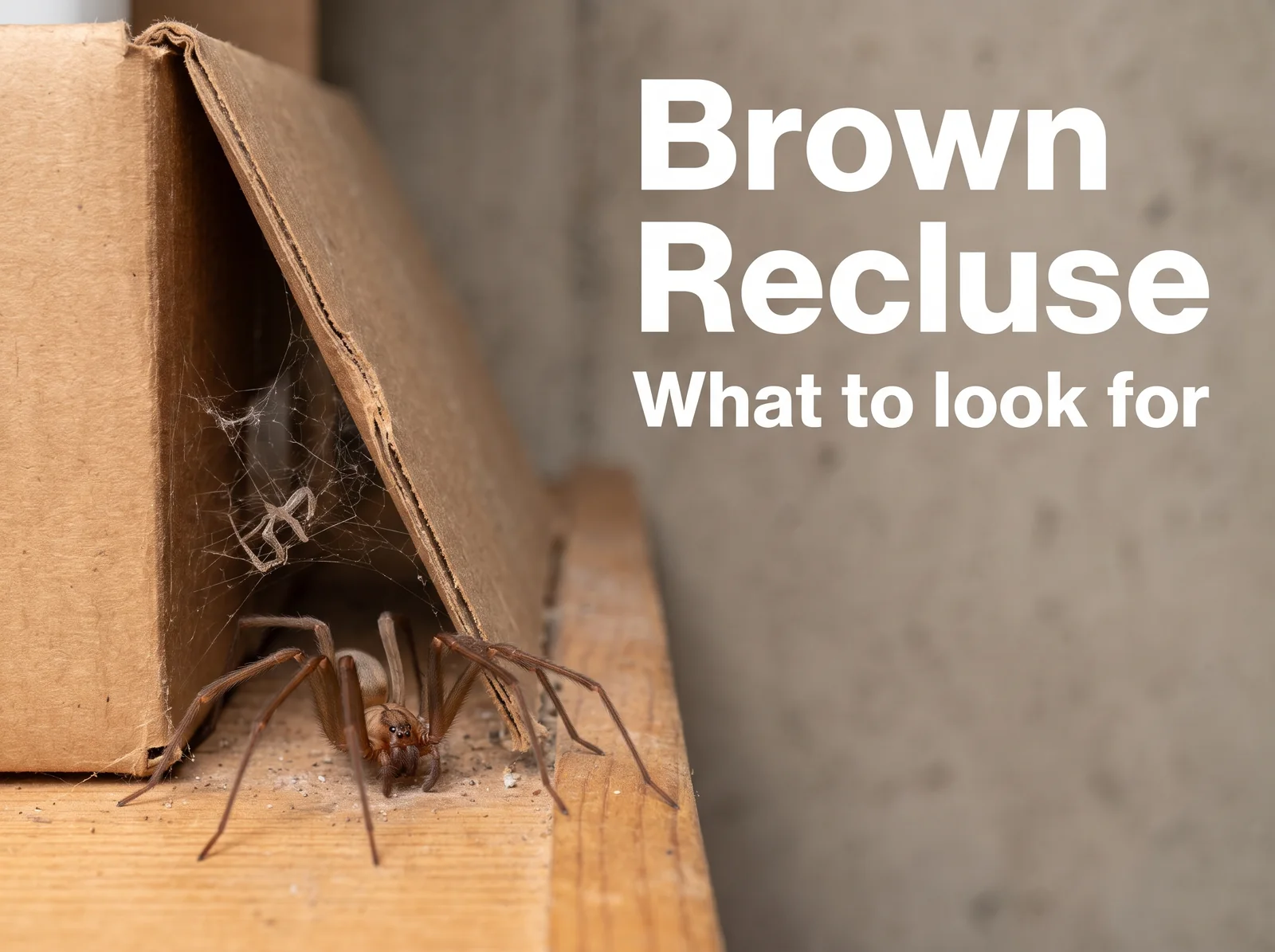
Why do brown recluse spiders infest attics?
Attics offer an ideal habitat for brown recluse spiders because they rarely experience foot traffic. These spiders are naturally shy, preferring dark, dry voids where they can rest during the day without disturbance. Cardboard boxes, old clothing piles, and fiberglass batts mimic the rotting logs and rock piles they inhabit outdoors.
Your attic also hosts a steady supply of silverfish, beetles, and moths. Because brown recluse spiders are active hunters that scavenge dead insects, a quiet attic with minor pest activity gives them everything they need to thrive and reproduce unnoticed for long periods.
How can you safely inspect your attic for spiders?
Before stepping into the attic, put on protective clothing. Wear heavy work gloves, a long-sleeved shirt tucked into your pants, thick socks, and boots to prevent accidental bites if you brush against a hidden spider.
Carry a bright flashlight and move slowly across secure flooring. Look for irregular, loose webs tucked into low corners, under insulation edges, and behind stored containers. Unlike garden spiders, brown recluse spiders do not spin symmetrical webs; their webbing looks like disorganized, off-white strands used strictly for shelter.
- Wear fitted leather or rubber-coated gloves during inspection.
- Check behind stored goods, joists, and wall junctions.
- Avoid sticking bare hands into dark openings or open boxes.
What storage habits help eliminate attic hiding spots?
Standard cardboard boxes are one of the main reasons brown recluse spiders linger in attics. Spiders easily slip through folded flaps and feed on other pests attracted to the glue and paper. Swapping cardboard for clear plastic storage totes with tight-sealing lids instantly eliminates their favorite harborages.
Elevate storage bins off the floor using wire shelving units rather than stacking them directly against walls. Keep items organized and spaced slightly apart so air can circulate, making the surrounding environment far less attractive for resting spiders.
How do you use sticky traps effectively in an attic?
Flat glue boards are one of the most effective non-chemical tools for managing brown recluse spiders. Place dozens of traps along perimeter walls, near the attic hatch, behind storage bins, and beside roof trusses where spiders travel at night.
Check the traps every few weeks to monitor the population. Glue boards catch wandering hunting spiders and give you a clear picture of which areas have the highest activity. When a trap fills with dust, spider captures, or stray insects, replace it immediately with a fresh board.
How do you stop spiders from moving into living spaces?
Spiders often travel down from an attic into bedrooms and hallways through small structural gaps. Sealing these pathways keeps the attic population isolated while you work to eliminate it.
Inspect the ceiling plane carefully from both sides. Apply silicone caulk around recessed light fixtures, ceiling fan mounts, pipe penetrations, and heating vents. Add foam weatherstripping around the attic access door or drop-down stair frame to create a tight barrier.
- Seal gaps around ceiling fixtures with paintable silicone caulk.
- Add fresh weatherstripping around the attic hatch perimeter.
- Install fine wire mesh over attic gable and soffit vents.
How does managing humidity and prey insects help?
Brown recluse spiders cannot survive without a steady diet of smaller arthropods. Improving attic ventilation helps lower extreme heat and reduces moisture pockets that attract prey like silverfish, roaches, and carpet beetles.
Ensure your soffit, ridge, and gable vents remain clear of debris and insulation blockage. If your attic tends to trap humidity from bathroom vents, check that ductwork exhausts completely outside rather than dumping warm, moist air under your roof deck.
When should you apply chemical treatments in the attic?
If sanitation, decluttering, and glue boards do not fully resolve the problem, targeted insecticide treatments may help reduce stubborn populations in wall voids and deep attic recesses.
Always choose an EPA-registered product specifically labeled for indoor attic use and spider control. Read the full label instructions before opening the container. Apply products strictly to cracks, crevices, and voids where humans and pets cannot contact residues, and never broadcast chemicals over exposed floorboards or stored personal belongings.
Questions you may still have
Can brown recluse spiders survive the extreme heat of an attic in summer?
Yes. Brown recluse spiders are remarkably resilient to heat and drought. During the hottest summer months, they retreat deep beneath thick insulation layers, inside cardboard boxes, or into wall voids where temperatures remain moderate. They slow their metabolism to survive long periods without food or water until temperatures cool.
Should I vacuum up spiders and webs in my attic?
Using a vacuum equipped with a HEPA filter and an extension wand is an excellent way to remove live spiders, egg sacs, and webbing safely. Immediately after vacuuming, seal the vacuum bag inside a plastic trash bag and dispose of it in an outdoor bin so trapped spiders cannot crawl back out.
How long does it take to clear a brown recluse attic infestation?
Eliminating an established attic population usually takes several months of consistent effort. Because brown recluse spiders reproduce slowly and hide deep in structural voids, you must maintain glue traps, keep clutter cleared, and periodically recheck the space to ensure emerging juveniles are captured before reaching reproductive maturity.