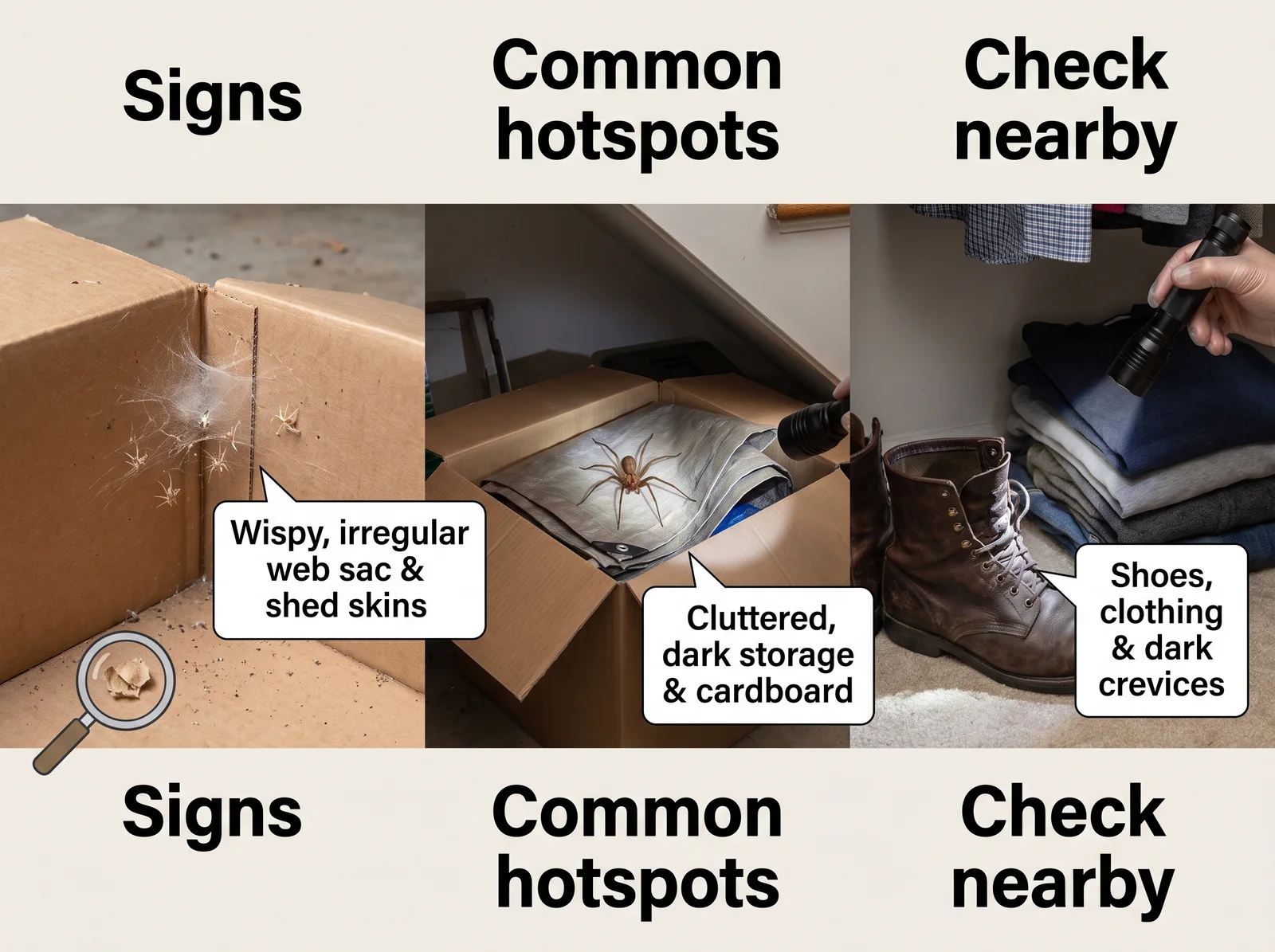
How do you confirm you have an infestation?
Finding a single spider does not always mean you have a full-blown infestation, but seeing multiple specimens over several weeks suggests an established population. Brown recluses are light to medium brown with a distinct dark violin marking on their back and six eyes arranged in pairs instead of the typical eight.
To confirm activity, place flat glue boards along baseboards, behind furniture, and inside closets. Check the boards weekly to count how many spiders you catch and identify where they travel most often.
- Place boards flush against walls where spiders walk
- Label trap locations to track population drops over time
- Focus on basements, attics, and utility rooms
Why are brown recluses nesting in your home?
Brown recluses seek out dark, dry, undisturbed environments that mimic natural shelter like tree bark and rock crevices. Attics, crawl spaces, unfinished basements, and cluttered storage rooms offer ideal conditions where they can hide during daylight hours without disruption.
They also need a steady food source. A home with silverfish, crickets, roaches, or other small insects provides plenty of prey, encouraging female spiders to stay, feed, and lay egg sacs throughout the warmer months.
What clutter should you remove first?
Cardboard boxes are one of the most common hiding spots for brown recluse spiders. The narrow spaces between cardboard layers and folded flaps provide warm shelter and mimic natural crevices. Transition stored goods into smooth plastic storage bins with airtight lids.
Remove stacks of newspapers, piles of old clothing, and clutter resting directly on floors. Keeping items lifted off the ground strips away the low-risk walkways spiders rely on to travel between rooms.
- Replace cardboard storage boxes with sealed plastic totes
- Hang clothing instead of leaving it in floor baskets
- Store shoes in hanging organizers or clear plastic boxes
How do you block access to living areas?
Spiders move from wall voids and crawl spaces into bedrooms and kitchens through tiny structural gaps. Inspect baseboards, pipe penetrations under sinks, and electrical switch plates for openings, sealing gaps with silicone caulk.
Install tight-fitting door sweeps on all exterior doors, basement entryways, and attic access hatches. Repair torn window screens to keep both spiders and the flying insects they hunt from wandering inside.
Can sticky traps eliminate an entire population?
Sticky traps alone rarely wipe out an entire colony, but they are an essential tool for continuous population control. Brown recluses hunt actively at night, and strategically placed glue boards capture mature adults before they can mate or lay new egg sacs.
Keep glue boards active year-round in utility areas and behind large appliances. When a board fills with dust or captured pests, replace it immediately so you maintain an unbroken barrier of monitoring stations.
When should chemical treatments be applied?
Pesticides should be considered a supplemental tool after physical sanitation, exclusion, and trapping are underway. If non-chemical measures do not sufficiently reduce the count on your glue traps, spot treatments in cracks and voids may be warranted.
Always select an EPA-registered product explicitly labeled for spiders and the specific indoor or outdoor application site. Read and follow the entire label carefully, avoiding broad broadcast spraying on exposed open floors where it provides little benefit.
When is it time to call an exterminator?
Severe infestations that span multiple floors, wall voids, and deep attic insulation often require specialized equipment and professional experience. If glue traps consistently catch high numbers across multiple rooms despite thorough cleaning, contact a licensed pest control operator.
A qualified professional can perform targeted void dusting, exterior perimeter treatments, and detailed structural inspections that reach deep harborages safely without risking excessive pesticide exposure in living quarters.
Questions you may still have
How long does it take to clear an infestation?
Eliminating an established brown recluse population often takes several months to a year. Because these spiders can survive for months without food and hide deep inside structural cavities, continuous monitoring with glue traps and persistent sanitation are required to break their reproductive cycle.
Do bug bombs work on brown recluse spiders?
Total release foggers or bug bombs are generally ineffective against brown recluses. The aerosol mist settles onto open surfaces and fails to penetrate the deep cracks, wall voids, and storage boxes where the spiders hide, often scattering them deeper into the structure.
What precautions should you take during cleanup?
Wear heavy work gloves, long sleeves, and closed-toe shoes when sorting stored items, moving boxes, or reaching into dark closets. Shake out clothing, blankets, and footwear before use, and pull beds several inches away from walls to prevent spiders from climbing up.